What Types of World-Class Sports Event Venues Use EPDM Rubber?
Table of Contents
However, there are strict red lines for scene classification: 11-person adult top football match natural grass competition areas are strictly prohibited from using EPDM for filling; track and field, artificial grass football, comprehensive ball games, and stadium supporting functional areas are their legal mainstream application scenarios. This article combines the official venue specifications of FIFA, World Athletics (WA, formerly IAAF), and international sports federations to systematically sort out EPDM material classification, hierarchical structure, adapted events, ban logic and full-venue supporting applications, fully covering the engineering standards of world-class events such as the Olympic Games, World Cup, World Championships, and Intercontinental Championships.
EPDM material competition classification and core performance indicators
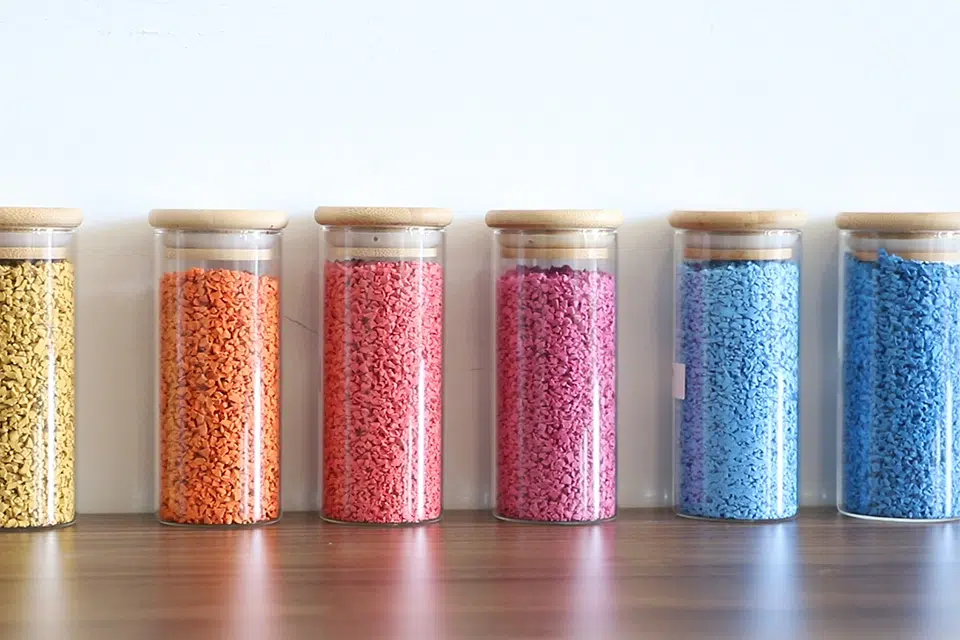
EPDM granules/coils are divided into four levels according to their glue content. Different world-class events are forced to correspond to exclusive levels. All international event venues must pass third-party testing for heavy metals, VOC, and anti-aging:
Popular leisure grade (contains 8%–17% glue)
It is suitable for spectator trails and off-site leisure areas. It has average elasticity and is not used in competition venues. Its weather resistance is only suitable for mild climates, and it will easily fade and turn pink when exposed to the sun for a long time.
Professional training grade (contains 20%–25% glue)
College training grounds, club backup warm-up venues, and comprehensive auxiliary competition venues meet the national standard GB/T 14833 high-quality standards. The impact absorption rate is ≥50% and can withstand daily high-intensity training.
International competition level (containing glue ≥30% virgin EPDM)
Olympic track and field track, Futsal World Cup, World Youth Championship artificial grass field, FIBA International Basketball Championship, World Athletics Level 1 certification mandatory requirements; -40 ℃ ~ 80 ℃ temperature zone performance without attenuation, 5000 hours of UV aging color difference ΔE <1.5, spikes, emergency stops, tackle friction does not shed particles.
Prefabricated membrane EPDM
Integrated factory molding, thickness error ≤0.5mm, used for temporary world championships, opening and closing ceremonies multi-functional temporary venues, paving smoothness is much higher than on-site cast-in-place particles.
Comparison of core advantages:
Compared with SBR recycled rubber: no polycyclic aromatic hydrocarbons or heavy metal precipitation, high surface temperature is 10–15°C lower, and no pungent odor;
Compared with TPE filled particles: lower cost, longer outdoor weather resistance life, suitable for outdoor use all year round;
Compared with polypropylene and HDPE hard plates: it has more than 60% impact absorption, which greatly reduces the risk of athletes’ joints and injuries from falling.
Mandatory use of EPDM world-class event venues (core competition surface)
World-class track and field competition: EPDM layered system is standard on all tracks
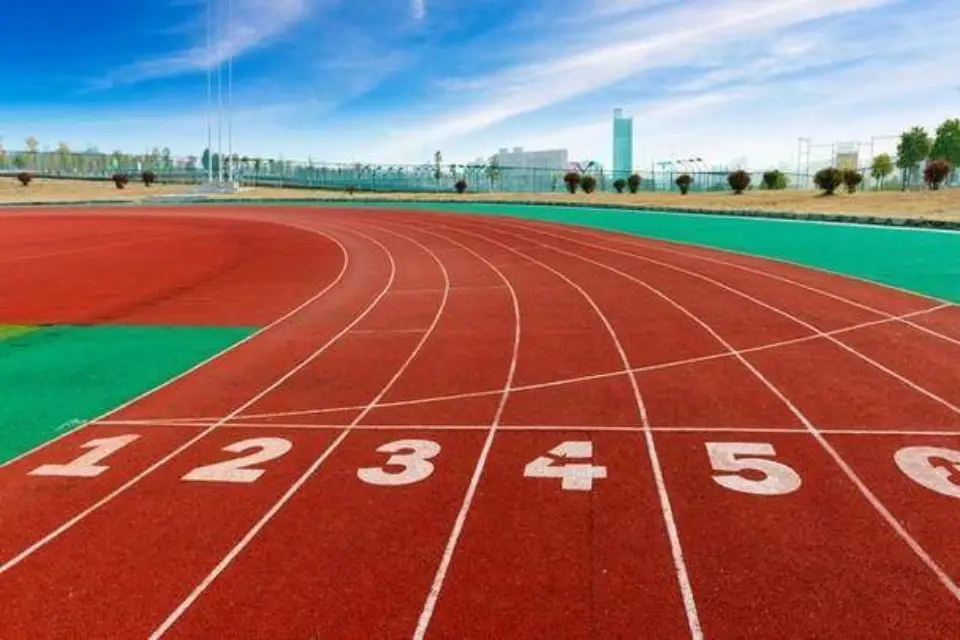
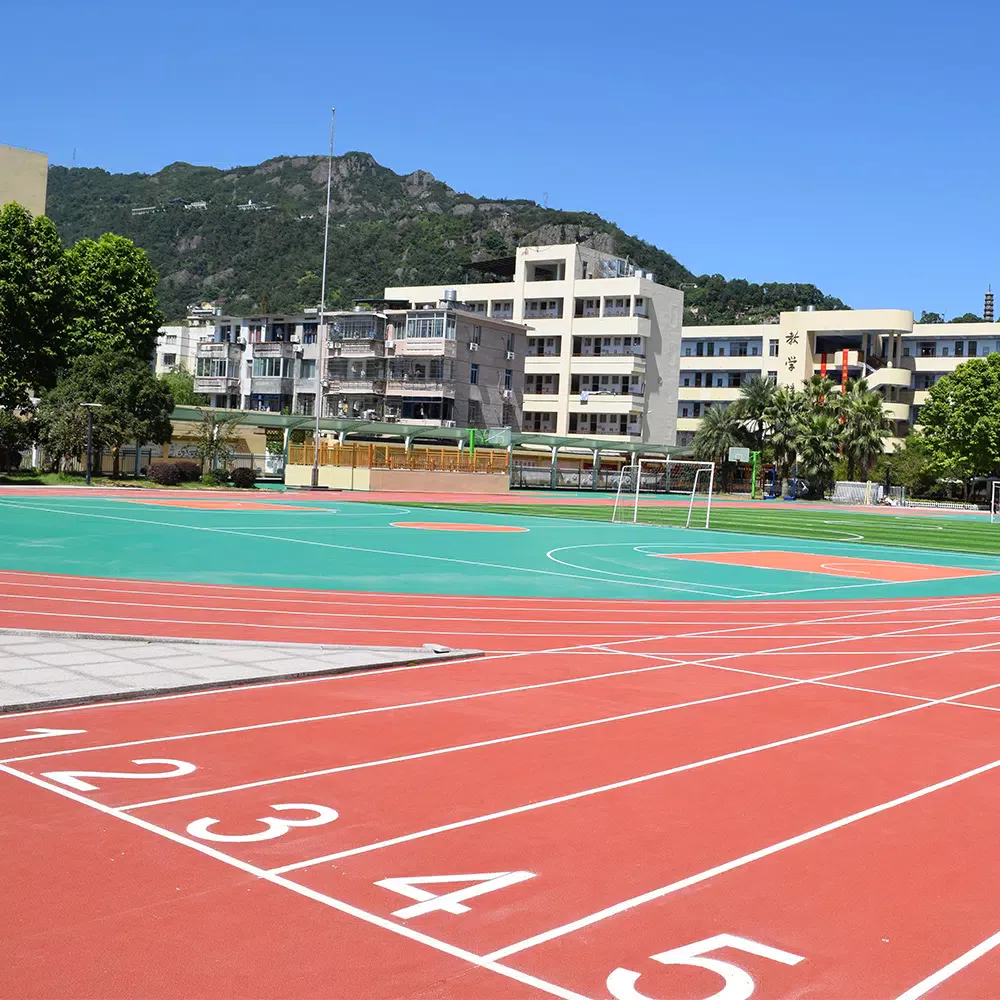
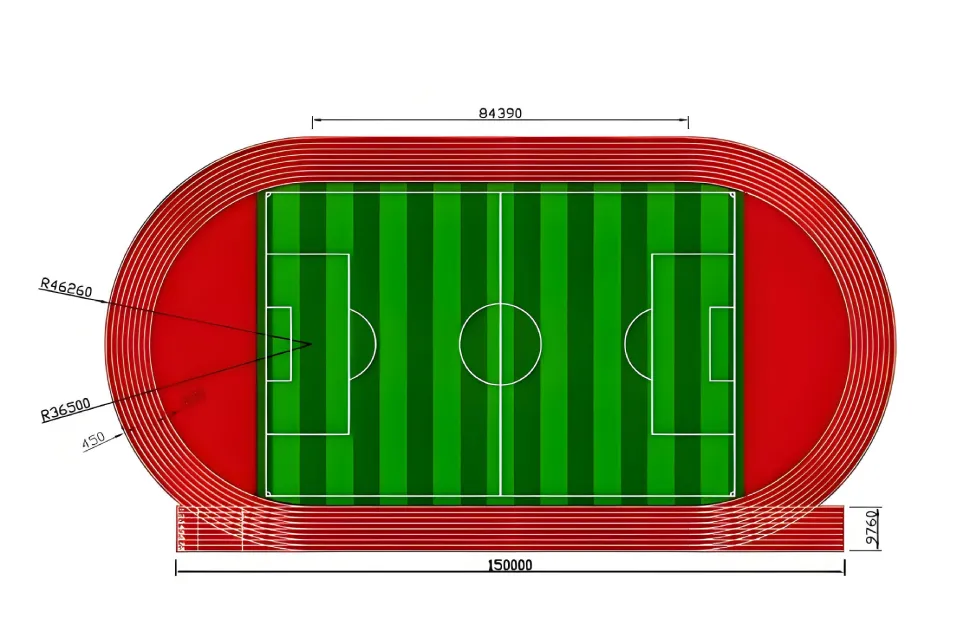
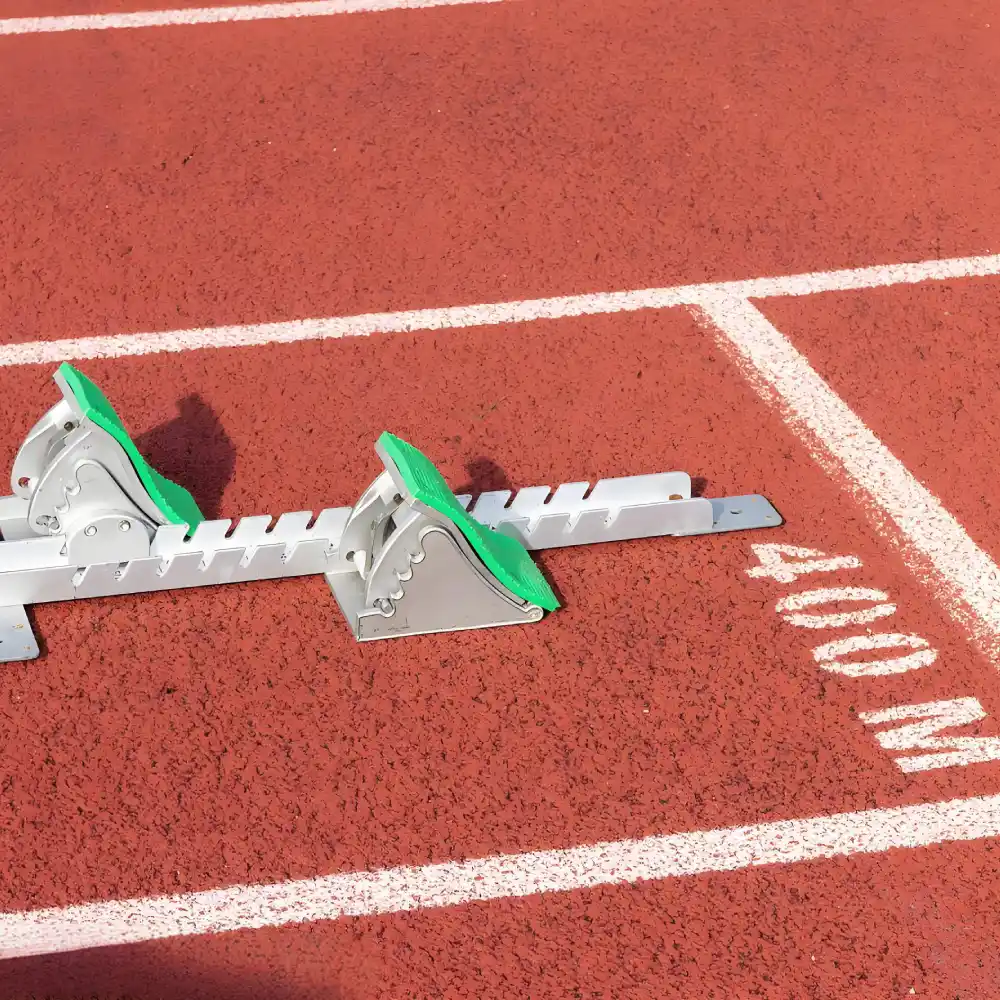
The surface layer of the tracks for World Athletics WA Level 1 certified events must use native high-glue content EPDM particles, which is the core and irreplaceable application scenario of EPDM, covering all comprehensive Olympic and track and field world championship systems.
1.Covered event list Summer Olympic Games track and field events, World Athletics Championships, Diamond League, Pan American Games, Commonwealth Games, European Athletics Championships, Asian Games home track and field events.
2.Standard layered structure (total thickness 13–15mm, competition mandatory minimum limit 13mm)
3.Bottom buffer layer (8–9mm): SBR black rubber particles + polyurethane glue, basic shock absorption;
4.Sealed transition layer: pure PU slurry seals the bottom layer to prevent water seepage and particles from turning up;
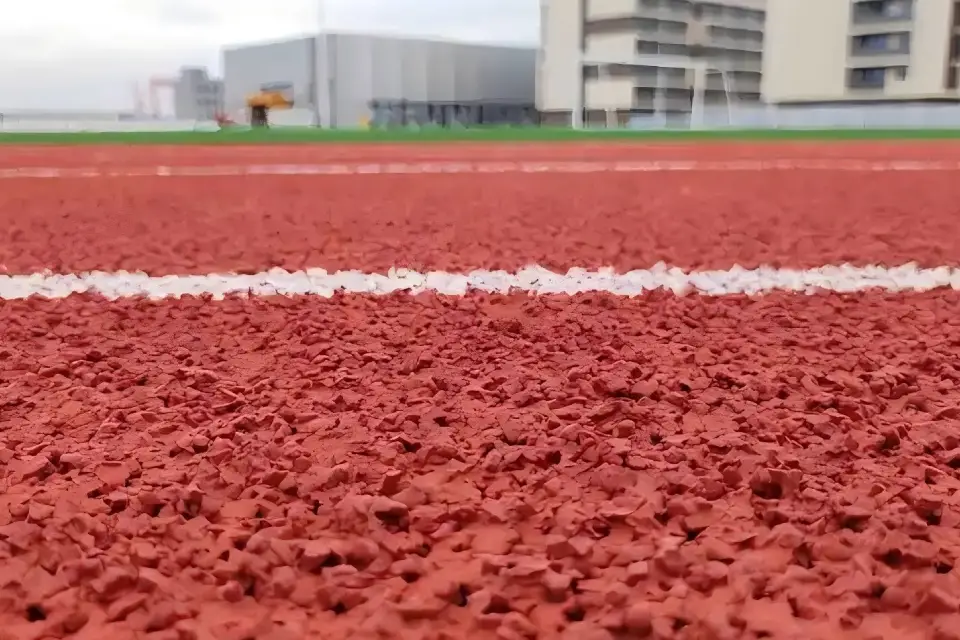
5.Competition surface layer (4–5mm): 30% glue content colored EPDM particles are sprayed into one piece, anti-slip coefficient ≥ 47BPN, suitable for sprint spikes, long jump, triple jump, shot put throwing area.
6.Process requirements The all-plastic track has no water-permeable holes and relies on the site’s 0.3%–0.8% turtle back slope for drainage; the prefabricated EPDM rolled track is mostly used in indoor world championships and temporary Olympic sub-fields, and can be disassembled and reused for secondary use.
Artificial grass system for international football events: FIFA certified venue-specific filler
FIFA clearly differentiates between two sets of material specifications: Natural Grass Mixed Grass Field and 3G/4G Artificial Grass Field. Only artificial grass competitions allow EPDM layered filling. The natural grass areas of adult men’s football matches such as the 2026 US-Canada-Mexico World Cup are completely isolated from EPDM.
1.World class football events allowed to use EPDM rubber
2.Indoor Futsal World Cup and Beach Soccer World Cup: Artificial grass for the whole venue, quartz sand (28–30kg/㎡) + EPDM particles (15–20kg/㎡) double-layer filling, no natural grass alternative indoors;
3.U17/U20 World Youth Championship and Women’s World Cup Preliminary Alpine Division: Perennial snow and extreme drought areas cannot cultivate stable natural grass, so the FIFA Quality Pro artificial grass system is used;
4.Club World Cup, World Cup official training ground, national team overseas warm-up base: only used for training venues, not for the finals;
5.Regular venues for NFL and CFL North American professional football leagues: native EPDM filled with artificial grass. During the 2026 World Cup renovation, HDPE protective pads were used to completely isolate the old EPDM layer to prevent it from being mixed into the natural grass base layer of the competition.
Outdoor comprehensive ball games world-class championship: EPDM cast-in-place surface for the entire venue
Top outdoor events such as FIBA, International Tennis Federation ITF, handball, and hockey all use EPDM integrated plastic floors:
1.Outdoor basketball, tennis and handball sub-fields for the Olympic Games and World University Games;
2.Multi-functional sports venues for the Pan American Games and African National Games;
3.Temporarily build open-air competition venues for the World Championships and Intercontinental Cup, and EPDM can be modularly dismantled and recycled. Structure: 5–8mm cast-in-place EPDM particles + PU bonding layer, hardness 60–70 Shore A, taking into account ball rebound and athletes’ anti-slip needs.
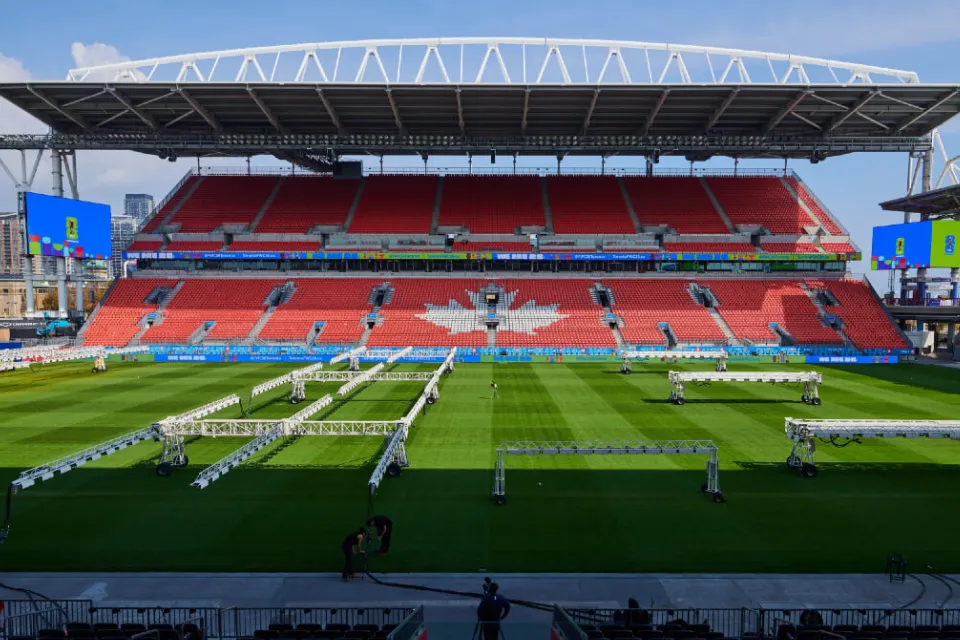
Only top-level natural grass football events using EPDM in supporting areas (including the 2026 US-Canada-Mexico World Cup)
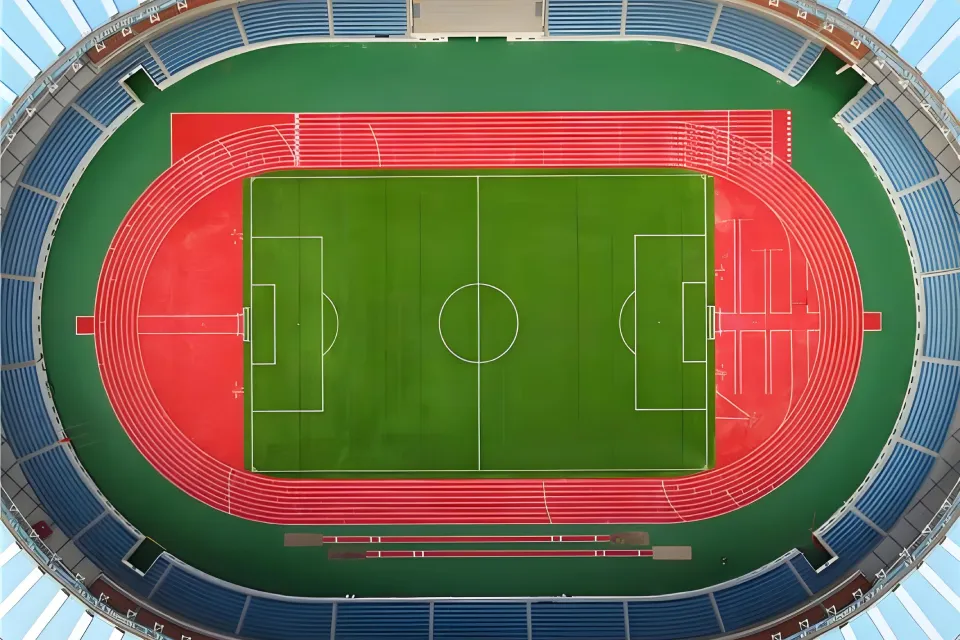
All adult 11-a-side top football matches (Men’s Football World Cup, European Cup, America’s Cup, Champions League finals, Olympic 11-a-side football finals) 105m×68m core competition lawn prohibits EPDM rubber particles throughout, and is only used in limited non-competition functional areas on the sidelines. It is divided into four major application points:
1.Technical area, bench, medical recovery area cushion 6-12mm EPDM shock-absorbing mats are laid on the coaching bench, player bench seating area, and ice recovery area to isolate the hard concrete ground to prevent falls and collisions, and are not connected to the base layer of the competition lawn.
2.Evacuation channels and barrier-free walkways around the lawn The outer pedestrian passages and media walkways of the venue use EPDM anti-slip plastic surface layers, which are suitable for high-density audience gathering and dispersion, and the wet anti-slip coefficient PTV is ≥55.
3.Venue building sealing and shock-absorbing components (non-ground surface layer) EPDM waterproof sealing strips are used for the expansion joints of the movable roof of the dome and the concrete settlement joints of the stands; the steel structure supports of the stands are equipped with EPDM shock-absorbing rubber blocks to reduce event noise and structural vibration.
4.On-field warm-up tunnel, referee locker room floor The players’ pre-match warm-up channel and match officials’ indoor functional area have seamless EPDM floors, which are waterproof and easy to clean, and comply with UEFA and FIFA venue facility specifications.
The core technical logic behind the complete ban on EPDM on natural grass competition turf
1.Risk of clogged drainage system EPDM rubber particles are small and penetrate into the quartz sand root bed after being washed by rainwater, blocking underground perforated drainage pipes and geotextiles, destroying the natural grass forced drainage system (World Cup venue water permeability standard ≥ 150mm/h);
2.Unbalanced field motion parameters FIFA has unified thresholds for the rolling distance, vertical rebound, and surface hardness of natural grass fields. Mixing rubber particles into the sand layer will greatly increase the rigidity of the field and change the global unified competition standards;
3.Thermal environment damages grass roots The heat absorption coefficient of EPDM is much higher than that of quartz sand. High-temperature venues in North America and Mexico will increase the surface temperature, burn the mixed grass root system, and accelerate the yellowing and degradation of the lawn;
4.Post-match reversible modification restrictions All venues for the US-Canada-Mexico World Cup are renovated and need to be completely restored to rugby/daily operation conditions after the game; EPDM cannot be completely separated after being mixed into the sand layer, causing permanent contamination of the original venue and violating the sustainable renovation and material recycling policies.
Temporary and assembled applications of EPDM in world-class events
Large-scale opening and closing ceremonies and temporary intercontinental championships use a large number of prefabricated EPDM membranes, which have the advantages of rapid paving and 100% recycling and reuse after the game:
1.Olympic Games opening ceremony venue, World Cup Fan Carnival multi-functional temporary sports ground;
2.In outdoor temporary e-sports and comprehensive sports performance areas, EPDM membranes can be laid directly on asphalt and concrete foundations without the need for complex base layers;
3.Intercontinental Cup backup temporary training ground, which will be dismantled and transferred to local sports venues for secondary use after the event, reducing the waste of disposable building materials for the event.
Summary
1.EPDM core positioning: the statutory standard surface material for world-class track and field tracks, artificial grass football, and outdoor comprehensive ball competition venues. It relies on stable elasticity and weather resistance and is irreplaceable;
2.Clear Use Red Line: Any EPDM filling is strictly prohibited in the adult 11-a-side top football natural grass competition area, and only a small amount of use is allowed in the auxiliary function area on the sidelines;
3.Material selection and grading logic: International first-level events must use virgin EPDM particles with a glue content of ≥30%, and products with medium and low glue content can be used in leisure and supporting areas;
4.Project value distinction: EPDM is divided into two categories: competition surface system and venue supporting shock-absorbing sealing components. The construction, materials and performance standards of the two are completely independent and cannot be confused.
The material specifications in this article all refer to the FIFA Venue Quality Plan, World Athletics Venue Certification Manual, International Sports Federation Facility Standards and the 2026 US-Canada-Mexico World Cup Venue Renovation Engineering Technical White Paper, which is suitable for professional reference in stadium design, event venue construction, and sports material selection.
Comments
Products
Cases
Hot Sale Products
Lasted Blog

What Types of World-Class Sports Event Venues Use EPDM Rubber?
EPDM (ethylene propylene diene monomer) rubber has the core chemical properties of high and low temperature resistance, UV resistance, elastic stability, environmental protection and non-toxicity. It is the core elastic building material of the world’s comprehensive international event venues.
What is a Polyurethane Running Track?
When you watch the Olympics or the World Athletics Championships, behind those iconic burgundy tracks lies a material technology that has changed modern sports – polyurethane track (PU Track).
How to Maintain Athletic Running Tracks
Athletic tracks are durable. With regular maintenance, their service life can be significantly extended.
The following points should be noted during daily use and maintenance.
Contact Us
- [email protected]
- +86-25 58933771
- Qiaolin Industrial Park, Pukou district, Nanjing city
Tags
Related Blogs

How to Repair the Prefabricated Rubber Track?
This guide provides instructions for the repair and maintenance of prefabricated rubber tracks used in athletic facilities and sports venues.
Guide to Poured Rubber Installation for Rubber Surface
This guide provides an look at poured rubber installation, a popular choice for playgrounds and various other applications requiring a safe, durable surface.

International Standards for Athletic Track Construction
As the core facility of competitive sports, the construction standards of athletic track are directly related to the performance of athletes’ competitive level and the fairness of competition.